
Description
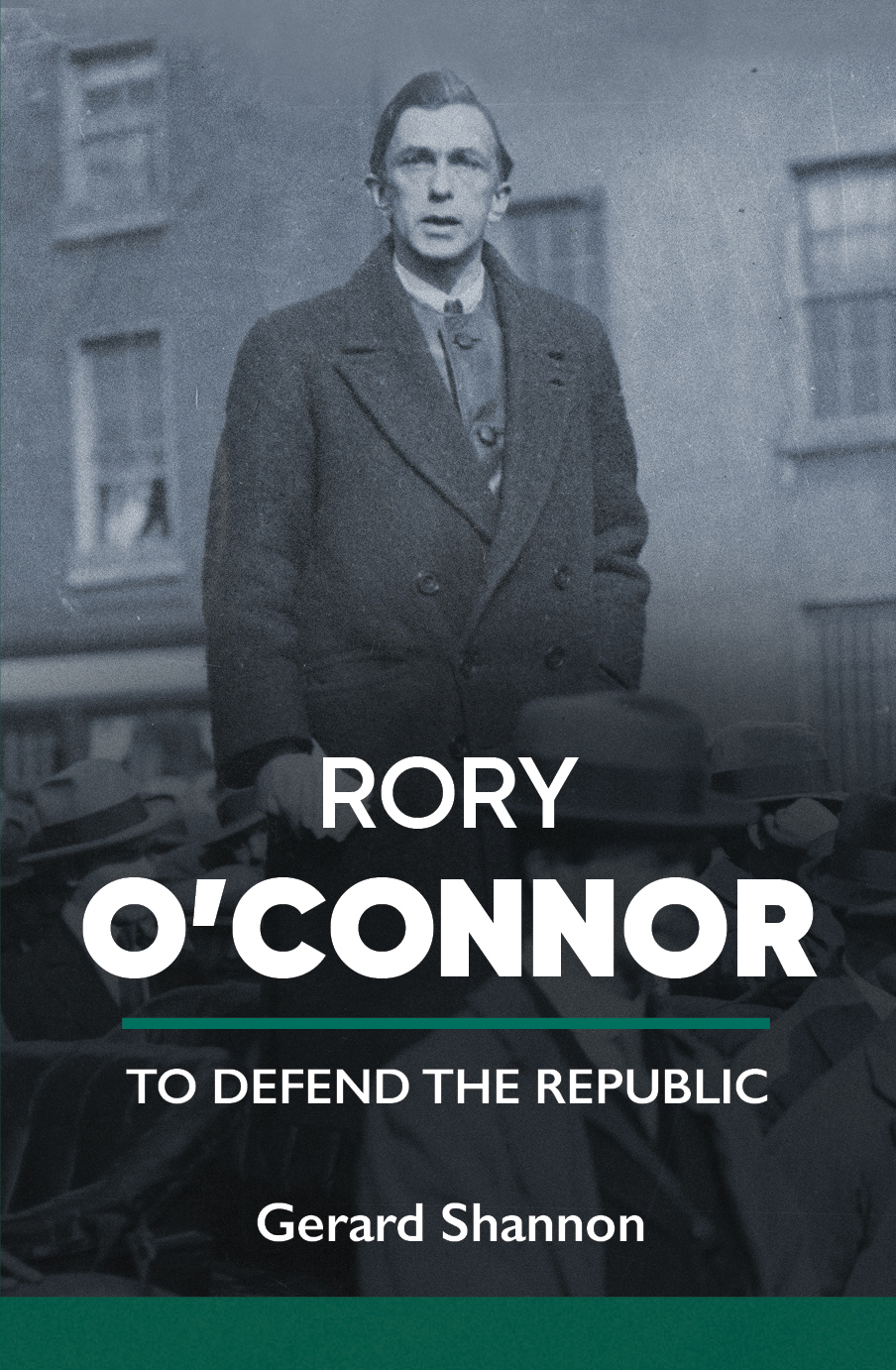
The execution of IRA leader Rory O’Connor on 8 December 1922, along with Liam Mellows, Dick Barrett and Joe McKelvey, marked a bitter turning point in the Irish Civil War and remains one of the most infamous episodes in modern Irish history.
An unlikely revolutionary, in his early years, O’Connor qualified as an engineer and worked on the Canadian railroad. Returning to Ireland in 1915, he joined the ranks of militant Irish republicanism and became devoted to the violent overthrow of British rule. After playing his part during the Easter Rising, in its aftermath he became a key figure in rebuilding the revolutionary movement.
By the outset of the Irish War of Independence, O’Connor was the IRA’s Director of Engineering and also worked in the Dáil’s Local Government department, where he began a close friendship with Kevin O’Higgins, who would later sit on the government cabinet that approved O’Connor’s execution.
On the signing of the Anglo-Irish Treaty, O’Connor became the public face of IRA opposition to the settlement. Captured several days into the Civil War, his execution in an illegal reprisal propelled him into the pantheon of Irish republican martyrs. In this first biography of O’Connor’s life, historian Gerard Shannon brings together various archival sources and accounts to help understand this important and often enigmatic IRA figure.
Contents
Prologue: 11 January 1922
1: 1883–1915
2: 1916
3: 1917–18
4: 1919–20
5: 1921
6: January–April 1922
7: May–June 1922
8: 28 June–6 December 1922
9: 7–8 December 1922
10: 1922–2022
Epilogue
About the Author
Gerard Shannon is a public historian who specialises in the Irish revolutionary period of the early 20th century. He has written numerous articles and done public talks primarily on leading revolutionaries. His first major publication, Liam Lynch: To Declare a Republic, was released to critical acclaim in 2023 and made the non-fiction bestseller lists. Gerard also works as a civil servant and is a resident of Skerries in north county Dublin.


